
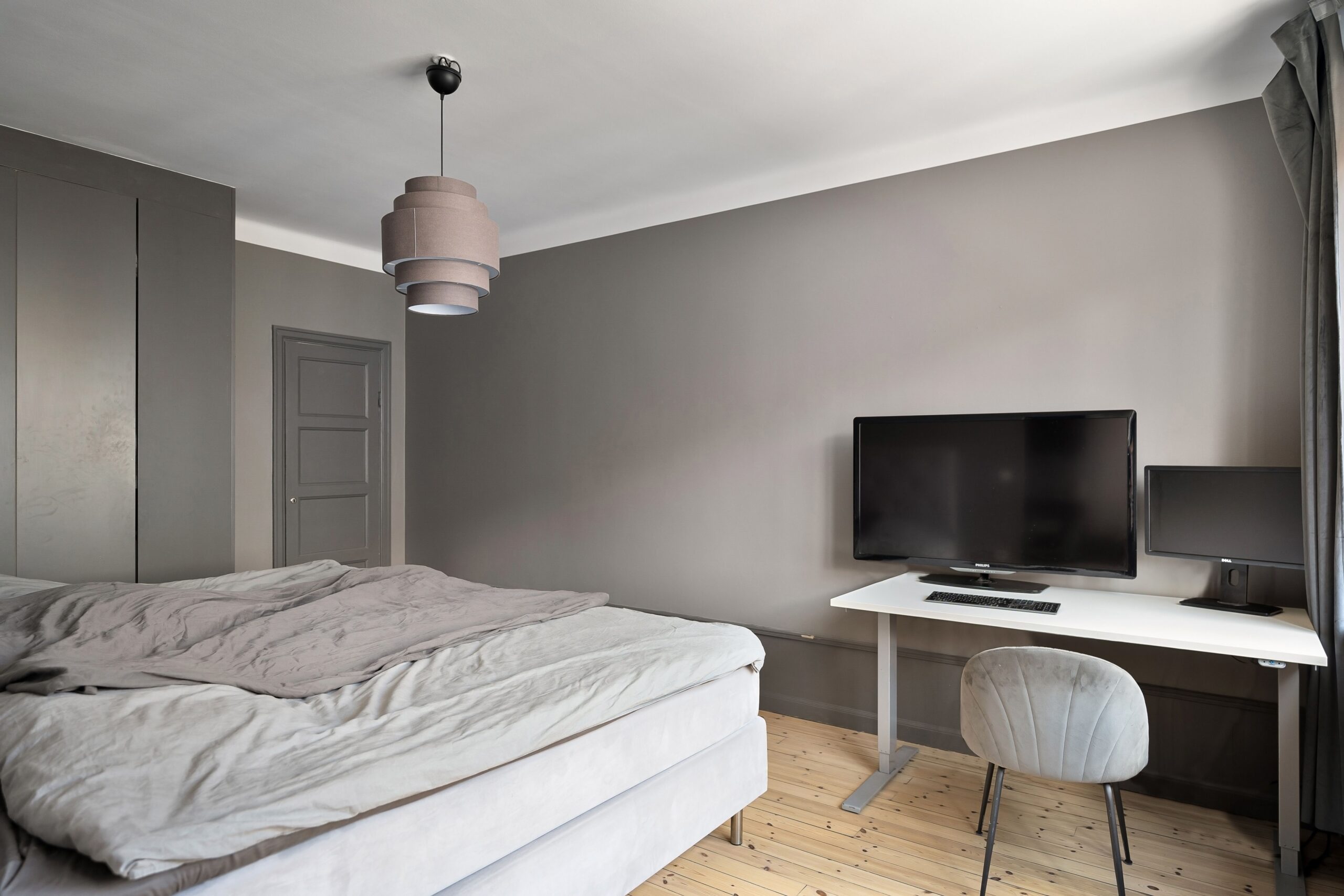
Private room
Your own study space, with shared household facilities.
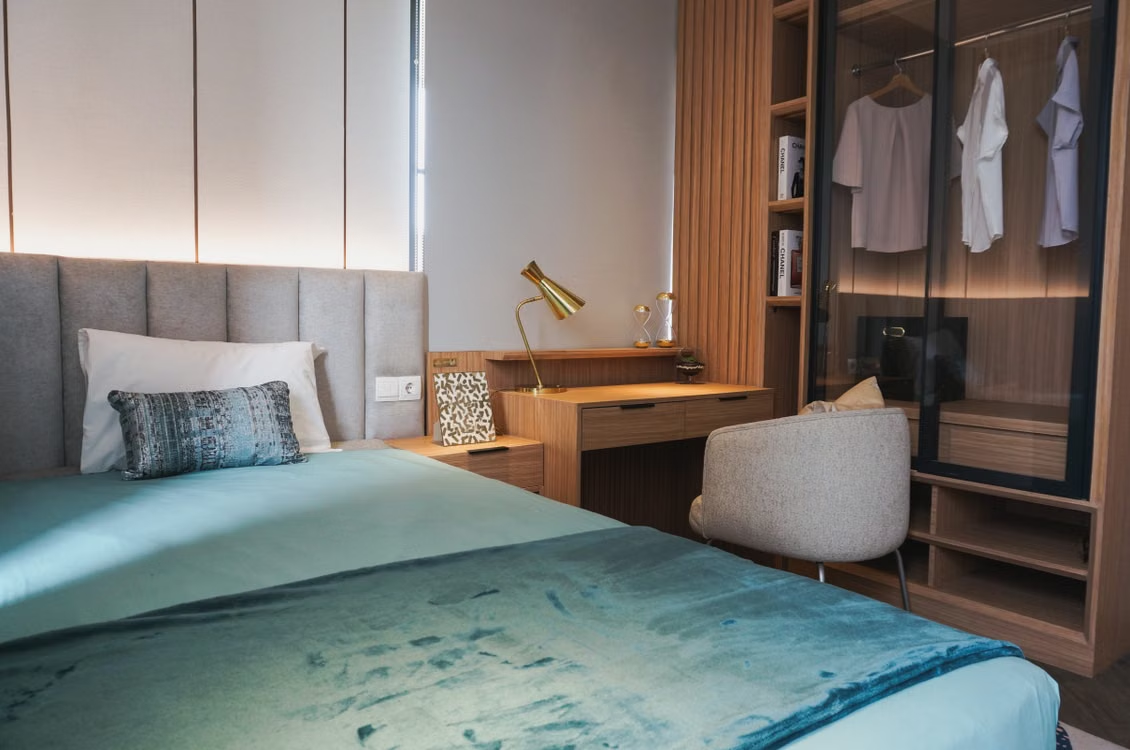
Studio living
Explore a compact home with more independent routines.
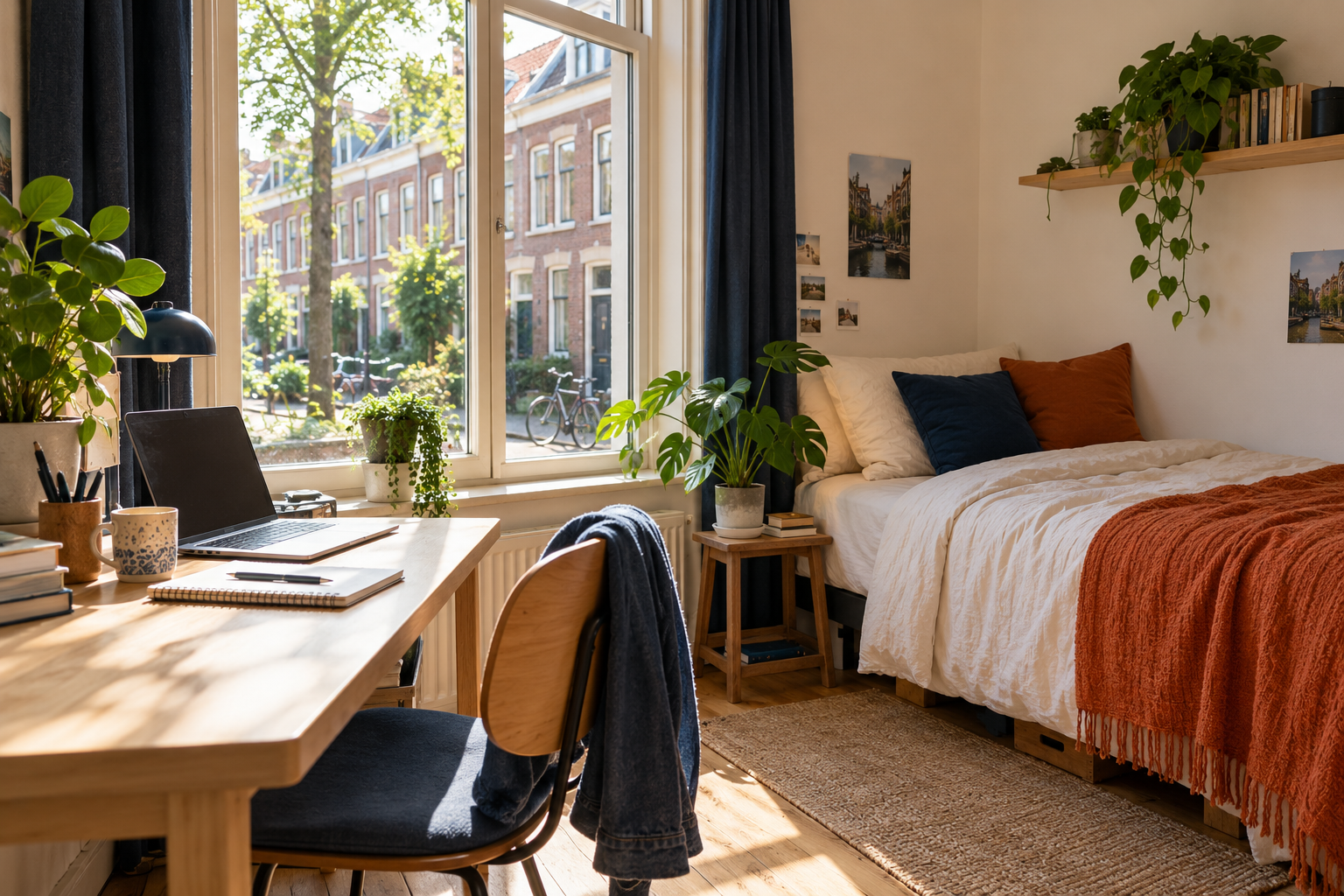
Shared apartment
Compare shared spaces and everyday household arrangements.
Find the space that fits your student life
A housing search becomes easier to organise when you understand the different ways a home can be arranged. The examples on this page compare a private room in a shared house, a self-contained studio, and a shared apartment. They are illustrative housing types, not verified properties or live availability. Use the comparison to decide which questions you should ask when you find an actual advertisement.
Start with your daily routine. Think about how you study, prepare meals, spend time with other people, and recharge after a busy day. A smaller space with the right household arrangements may suit you better than a larger room with an inconvenient routine. Write down what matters to you before deciding which type to investigate first.
Private room in a shared house
A private bedroom can give you a personal place to sleep and study while other facilities are shared. Ask exactly which spaces are communal, how many residents use them, and whether the room has enough storage and a usable workspace. The photograph here is an example of an interior, so check the actual inventory and layout of any room you view.
This arrangement is worth exploring if you are comfortable coordinating everyday routines with other residents. Ask about cleaning, guests, shared supplies, and the way household decisions are made. Do not assume that a social household means constant group activities, or that a quiet household means people never talk. Specific conversations reveal more than a short description such as friendly house or ideal for students.
Studio with your own facilities
A studio generally combines living and sleeping space, often with cooking and bathroom facilities within the unit. Confirm the actual layout rather than relying on the label. Ask where you would work, store clothes, prepare food, and dry laundry. A single open space can be convenient, but it requires you to think carefully about how different activities fit together.
Check what belongs to the unit and what remains shared within the building. Laundry, bicycle storage, entrances, or outdoor areas may still have communal arrangements. Compare the complete stated costs and furniture provision with other options using the same checklist. Avoid assuming that a studio is automatically more suitable simply because it offers more independence; the right choice depends on your preferences and the details of the offer.
Shared apartment and your next step
In a shared apartment, residents may have separate bedrooms alongside a common living area and kitchen. Ask who is responsible for communicating with the provider, how shared costs are described, and what happens when household members change. Any questions about contractual responsibility should be taken to a qualified adviser with the actual documents, because a general description cannot determine your legal position.
Use these three examples to create a shortlist of arrangements you would consider. Then move to the Housing Guide to compare actual advertisements and prepare viewing questions. There is no booking form on this page because Student Nest NL does not advertise available rooms. Its purpose is to help you recognise the differences, organise your priorities, and approach real providers with clearer questions.